
Japchae is a classic Korean glass noodle stir-fry made with chewy sweet potato noodles, thinly sliced beef, and colorful vegetables in a savory-sweet soy sauce. This streamlined method cooks everything in about 35 minutes, making it practical for weeknights while still worthy of holidays and special gatherings.
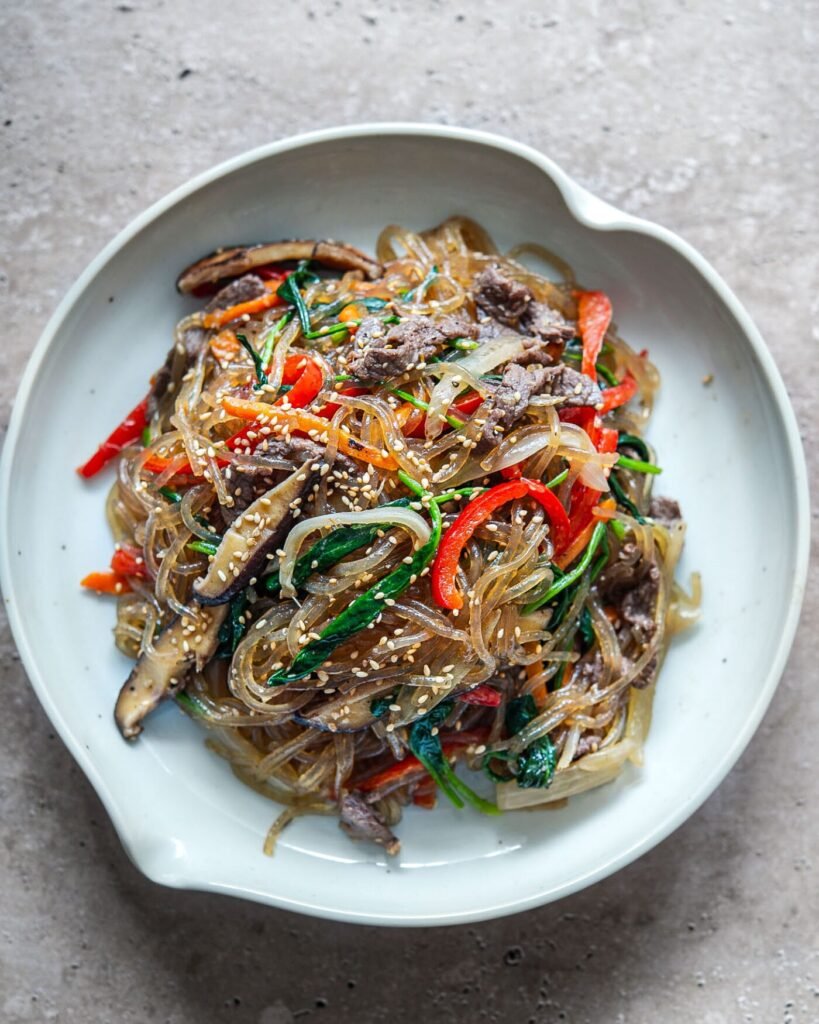
I first learned to make japchae (잡채) while I was in college in the U.S., homesick and craving something familiar. A Korean professor’s wife showed me a way to prepare it that kept the traditional flavor and texture but simplified the cooking process. That method stayed with me.
In Korea, japchae is more than just a noodle stir-fry. It’s a dish expected at holidays, birthdays, and family gatherings, often made in large batches and served at room temperature so everyone can share. The balance of chewy noodles, well-seasoned beef, and lightly sautéed vegetables is what makes it memorable.
Over the years, I’ve refined that technique so it stays true to the authentic flavor while reducing extra steps and pans. It’s the version I cook when I want something comforting yet celebratory, whether I’m serving it alongside my traditional Beef Bulgogi or building a Korean-style meal with my classic bibimbap.
If you’re craving more noodle comfort, explore my full collection of Korean noodle dishes. Many of them are just as satisfying and weeknight-friendly.
Why This Japchae Method Works
- Protects the noodles’ texture. Sweet potato glass noodles (dangmyeon) can easily become soft and sticky if overboiled. Soaking them first and finishing them in the pan keeps them chewy and springy, which is the texture japchae is known for.
- Balances seasoning without extra steps. Instead of cooking each ingredient separately in multiple pans, this method builds flavor in stages within one pan. The vegetables stay vibrant, the beef remains tender, and the noodles absorb the savory-sweet sauce evenly.
- Stays true to Korean home cooking. Japchae has always been flexible in Korean kitchens. While beef is traditional, it can easily be made vegetarian or adjusted based on seasonal vegetables, as long as the signature balance of soy sauce, sweetness, and sesame oil is preserved.
- Practical for modern cooks. This technique keeps the classic flavor and texture intact while simplifying the process, making it realistic for weeknights without losing its celebratory feel.