
Galbi Jjim is a beloved Korean dish made by braising beef short ribs until they turn fall-off-the-bone tender in a savory-sweet sauce. Simmered with vegetables, it becomes a comforting dish often reserved for celebrations. This recipe guides you through making Galbi Jjim at home with authentic flavors and a richly satisfying taste worthy of any holiday table.
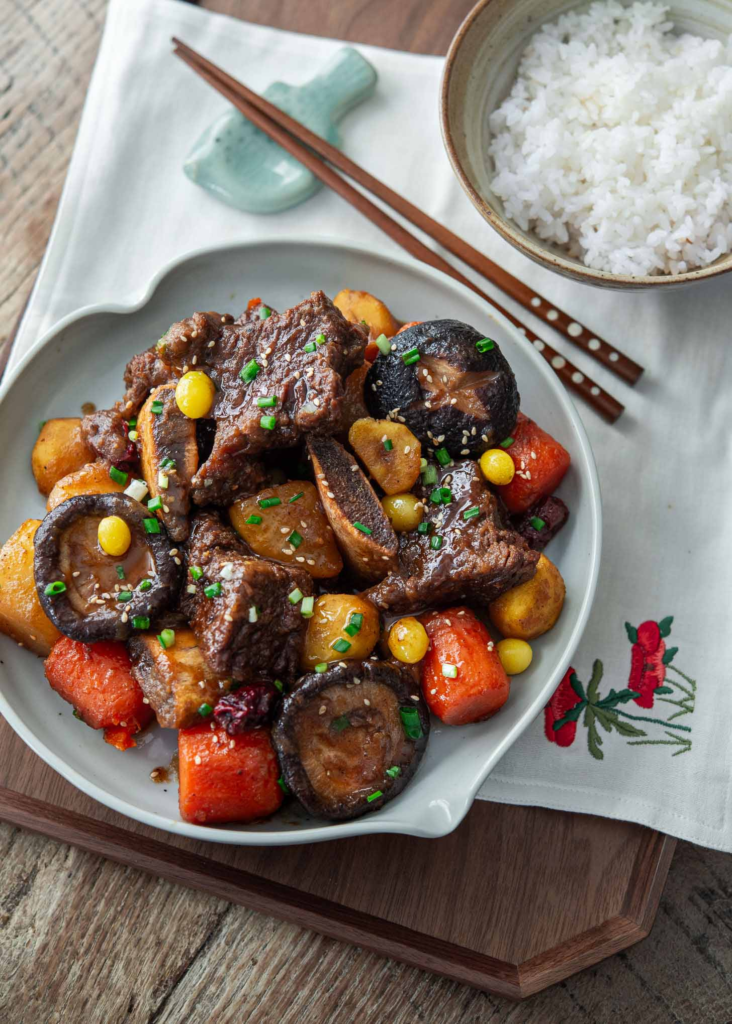
Galbi Jjim (갈비찜) is one of those dishes that makes the table feel special the moment it appears. Growing up, my mom only made these Korean braised short ribs for birthdays, Chuseok, or Seollal, since beef ribs were considered too expensive for everyday meals. To me, Galbi Jjim has always meant celebration and family gatherings.
The short ribs are slowly braised until tender in a glossy sauce made with soy, garlic, and the natural sweetness of Korean pear. Some people experiment with different cooking methods, but I always return to traditional slow braising. It creates that rich, fall-off-the-bone texture and deep gravy that no shortcut can truly replace.
This recipe stays close to tradition, with a few of my own touches that make it one of the best Galbi Jjim versions you’ll try. Serve it with rice, kimchi, and a few simple side dishes, and you’ll have a holiday-worthy Korean meal at home.
Many people confuse Galbi Jjim with Galbitang (갈비탕), another beef rib dish. Galbitang is a clear, savory soup often served at weddings, while Galbi Jjim is a saucy, festive braise made for holidays and celebrations.
My Tested Method for the Best Galbi Jjim
No soaking the ribs – Many traditional recipes call for soaking short ribs in water to “remove blood.” With modern butchering, that step isn’t needed and actually washes away natural beef flavor. Instead, I use a quick parboil at the beginning to remove impurities and excess fat. This way, the ribs stay clean but still taste deeply rich.
Quick sea kelp stock – Instead of plain water, I simmer a piece of dried kelp for just a few minutes. This easy step builds a clean umami base that makes the braising sauce taste deeper and more balanced.
Dutch oven braising – I tested this recipe in the slow cooker, Instant Pot, and stovetop. The Dutch oven wins every time. It gives the sauce body, keeps the ribs juicy, and allows you to add vegetables at just the right time so they don’t turn mushy.
Authentic with flexible add-ins – The recipe follows the traditional holiday style I grew up with, but I also show you optional ingredients like chestnuts, jujubes, and ginkgo nuts if you want to make it truly festive.
Proven family recipe – This is the version I make for my own family today, blending the taste of my mother’s cooking with small tweaks I’ve learned over years of testing.